

Every couple has that conversation. You know the one. It starts as a simple question about the dishwasher or the in-laws, and five minutes later you're both standing in the kitchen wondering how you got here.
The way we communicate is often ingrained. We learn it in the families we grew up in, and it gets cemented, even when it doesn't work. Everyone wants to be able to say what they mean, need, or want. But emotions and style get in the way.
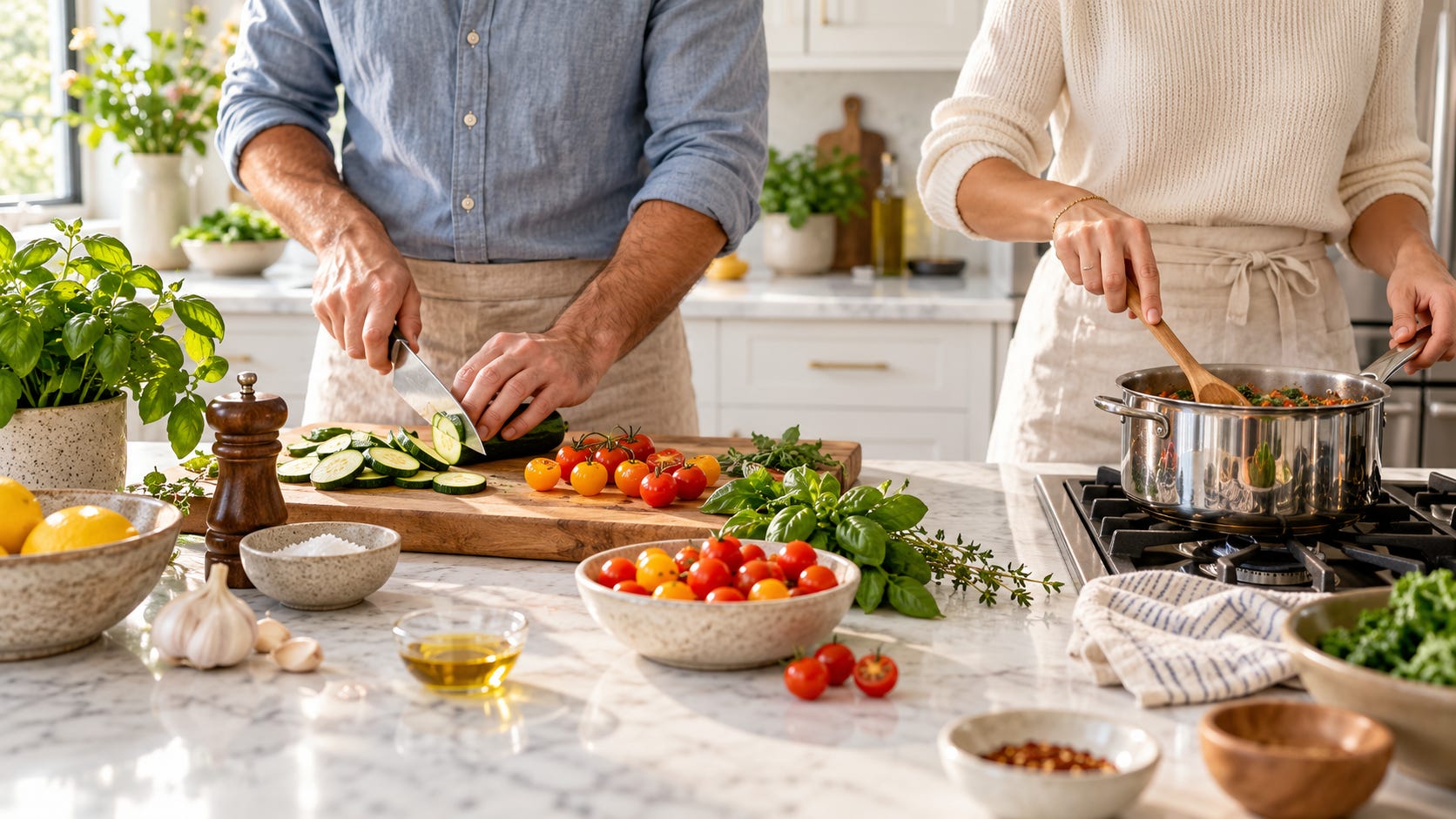
You learn a lot about a couple by watching them cook together. One partner chops vegetables in perfect slices; the other chops at random. One is confident at the stove; the other hovers by the fridge. How they react to each other over even a small task says a lot.
Which is exactly why the kitchen is such a good place to practice. Here are seven kitchen lessons for how to communicate with your spouse, without it turning into an argument.
1. Check your pantry for expired phrases
Everyone has canned goods in the back of the pantry. But have yours expired? If you keep repeating the same words and still feel unheard, those phrases may be past their use-by date. No one can take them in. Swap the old beans for something fresher, and you might be surprised how well you're heard.
2. Soften the butter first
When warm toast meets butter, the butter melts. It's a lovely picture of softening: your words, your tone, even your judgment. Before a hard conversation, ask yourself what could use a softer touch.
3. Start with what you love
Before you bring up what's missing, name a few things you like or love about your partner. Not as a trick. As a reminder to both of you of what you're protecting.
4. Use "I," not "you"
There's a big difference between "You never help" and "I wish we cooked together more." The first is a put-down. The second is an invitation. Say one thing, just one, that you'd like more of. Then really listen when it's your partner's turn.
Looking for an easy conversation starter? The free Cooking Therapy app for iPhone has a new kitchen journal prompt every day. Try answering it together. Download Cooking Therapy
5. When it boils, lower the flame
When sugar and butter come to a boil, the bubbles make it impossible to see the mixture clearly. Let that sit with you: when things are bubbling hot, they're unclear. If a conversation starts to boil, turn down the heat, on the stove and in yourselves.
6. Pour your heart out, gently
You can pour hot caramel over crackers without upsetting them, if you're careful. Can you do the same with the issues in your relationship? Say what you feel, but in a way that doesn't leave your partner going to pieces.
7. Sprinkle something sweet, then let it chill
End every hard conversation with something kind: a compliment, a thank-you, a good memory. Then let things chill. Like anything that's been heated, what you discussed is more likely to set once it has some space.
Try it together
The next time you're both in the kitchen, choose one lesson and try it. Cook something simple side by side, phones in the other room. If the conversation gets heated (between you two, not the food), pause and try to bring back some fun. Let go of fixing it and just cook together.
Cooking together is never a substitute for couples counseling. But if you're already working with someone, the kitchen is a wonderful place to practice what you're learning, and to bring what you notice there back to your next session.

P.S. If this story resonated with you, please click the ❤️ below. It helps more readers discover TherapeuticBites and it lets me know what connected with you.
Cooking Therapy pioneer Debra Borden, LCSW, is the author of four books, including Cooking As Therapy - How to Improve Mental Health Through Cooking. Learn more here about her writing journey, how she became known as The Sous Therapist, and the stories that shape her work.