

Somewhere along the way, cooking stopped being fun.
Maybe it became the 6 p.m. scramble. Maybe you cooked for a family for so many years that it turned into a job you never applied for. Or maybe you never really liked it to begin with.
Here's something I tell everyone: just as you need not be a great artist to benefit from Art Therapy, you need not be a great cook or even like cooking to benefit from Cooking Therapy.
And here's the other thing: who knew therapy could be seriously helpful without being terminally serious? The same goes for cooking. If you want to know how to enjoy cooking again, start by taking it a little less seriously.
Here are seven small shifts to try.
1. Name your recipe
I name every single recipe I make. Not "chicken," but "Simply Superb Simplified Salmon," or "Roll With It Rolls." It sounds silly, and that's the point. A name turns a chore into something with a purpose, and it makes you smile.
2. Change one ingredient
The next time you make your regular PB&J or your usual pasta, try one new thing. Add banana. Use a different bread. Toss in an herb you've never used. Let the ordinary inspire something a little more interesting.
3. Play with your food
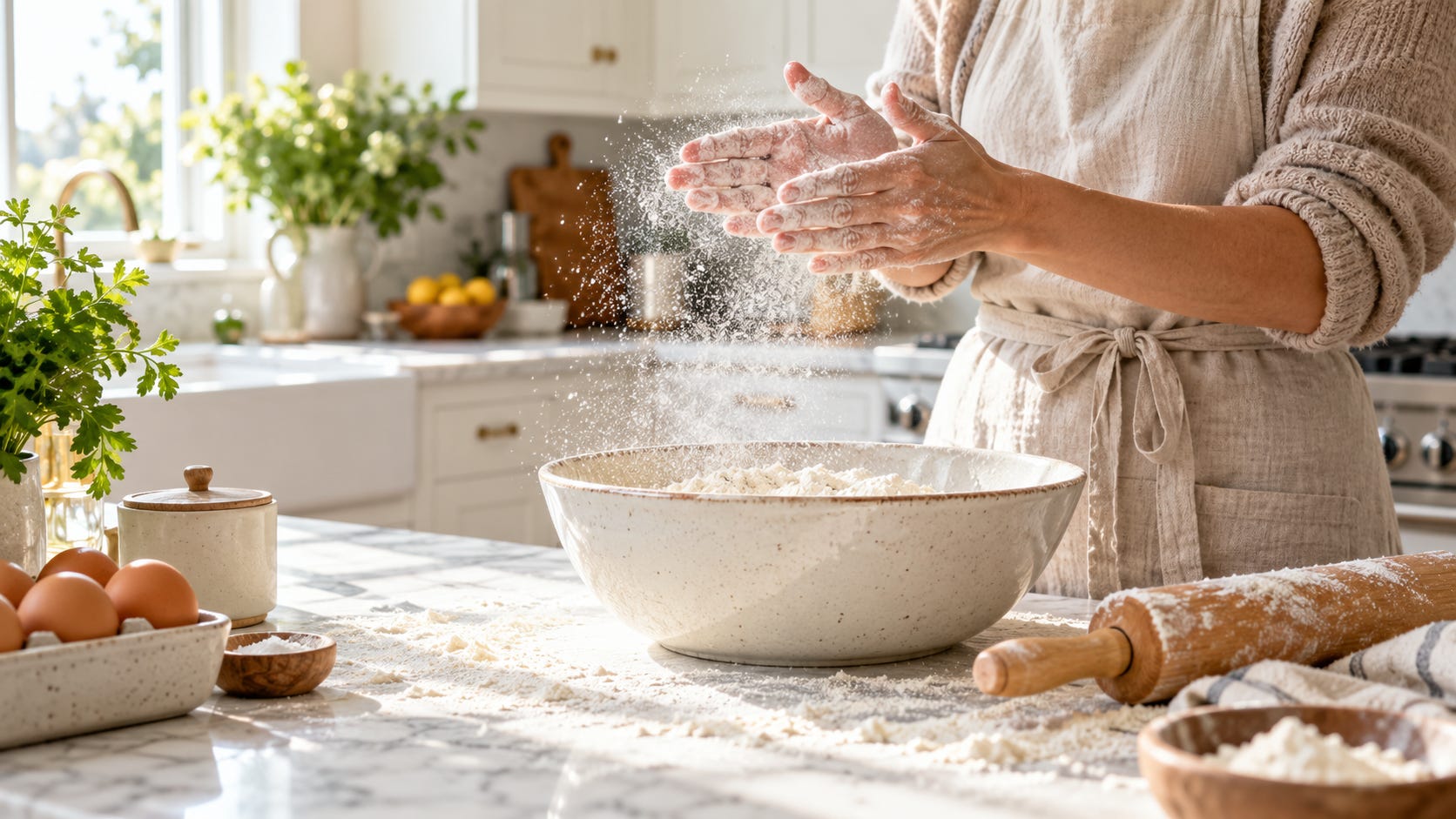
As we get older, we sometimes forget to be silly. Put some flour on your hands and clap them together. Dab a little batter on your partner's nose. Playfulness can be just as nourishing as dinner.
4. Start small
If you're out of practice, don't start with the twelve-layer cake on the cover of a magazine. Try a four-layer cake. Or a simple crumb pie. Work your way up. You'll enjoy it more when you're not fighting it.
Want a little calm every day? Get a new kitchen journal prompt and a short guided audio in my voice every day in the free Cooking Therapy app for iPhone. Download Cooking Therapy
5. Let mistakes be part of the recipe
When the bread doesn’t rise, you might still have pita or tasty breadcrumbs. If the chili sticks to the pan, call it sloppy Joes. Cooking isn’t about perfection. It’s about experimentation. In cooking therapy, there are no failures, because showing up and trying something new is the goal.
6. Get organized first
A lot of kitchen stress comes from chaos: searching for the measuring cup while something burns. Try mise en place, "putting everything in its place," before you start. Everything chopped, measured, and lined up. It's amazing how much calmer cooking feels.
7. Notice the good parts
The smell of garlic in olive oil. The sound of the knife. The moment a sauce comes together. Take a second to actually notice them. And when you're done, give yourself a round of applause. You made something. That counts.
Cooking as therapy, not just cooking
There's a difference between "just cooking" and cooking therapy. When you're just cooking, you can zone out. In cooking therapy, you zone in: on your thoughts, your patterns, and the feelings attached to them.
You don't have to do that every night. But try it once this week. Pick one of these shifts and see whether the kitchen starts to feel a little less like a chore and a little more like yours again.

P.S. If this story resonated with you, please click the ❤️ below. It helps more readers discover TherapeuticBites and it lets me know what connected with you.
Cooking Therapy pioneer Debra Borden, LCSW, is the author of four books, including Cooking As Therapy - How to Improve Mental Health Through Cooking. Learn more here about her writing journey, how she became known as The Sous Therapist, and the stories that shape her work.