

When people hear "mindfulness," they often picture meditation: eyes closed, legs crossed, trying very hard to think about nothing.
That's wonderful if it works for you. But it isn't the only way.
In cooking therapy, mindfulness is an active step. It's less about breathing and more about being present as you perform each task. You'll pause sometimes to take in a sight or a smell, but for the most part, you're mindful while doing.
And because most of us are in the kitchen every day anyway, it's one of the easiest places to practice. Here are seven mindfulness activities for adults that happen right at the stove.
1. Wash your hands with intention
Start every cooking session at the sink. As the water runs, focus on clearing out any negativity and starting fresh. It's a small ritual, and it signals to your mind that something different is about to begin.
2. Notice something beautiful
We all have such trouble being still today. Before you rinse a bowl of berries or slice a tomato, stop and really look at it. The color. The shape. Notice the beauty, and then notice how you feel noticing it. Don't just pass it by.
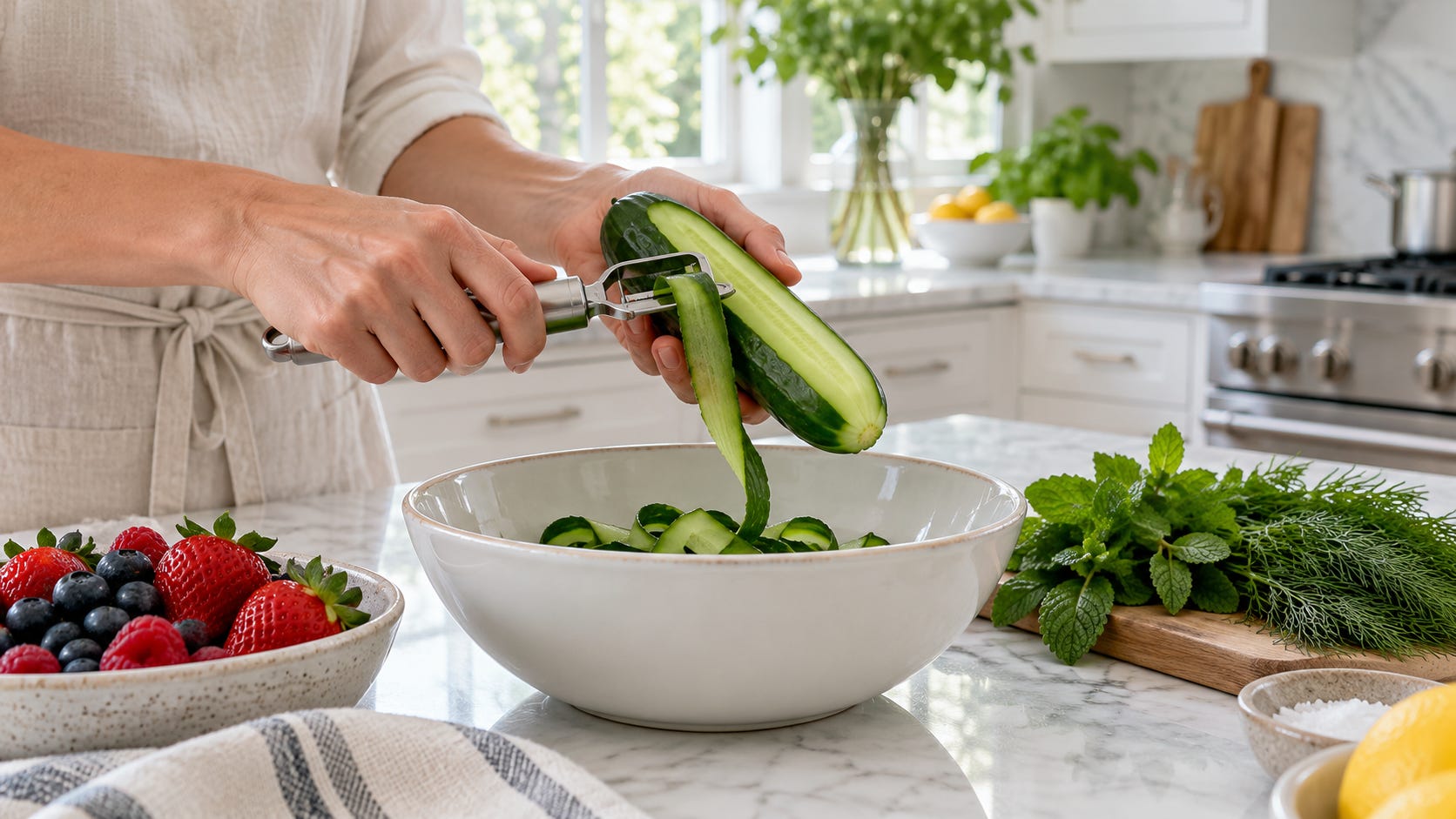
3. Peel slowly
Whether it's a cucumber, a potato, or an orange, peeling is an invitation to slow down. As you peel away the outer layer, think about what you'd like to peel away in yourself: a bitter thought, an old habit, anything that's keeping you from the good stuff underneath.
4. Listen to the kitchen
Close your eyes for a moment and just listen. The sizzle of garlic in olive oil. The knife on the cutting board. The bubble of a simmering pot. Your kitchen makes a lot of music if you let it.
Prefer to be guided? The free Cooking Therapy app for iPhone has short mindful audios in my voice you can play while you cook. Download Cooking Therapy
5. Stir and wait
Some recipes can't be rushed. Pudding, risotto, caramel: they need patient stirring until they reach the right consistency. That waiting is a chance to practice sitting with a feeling instead of running from it. Stir gently and let the moment be what it is.
6. Scoop and unplug
Scooping out a cantaloupe or a squash is wonderfully tactile. Use it as a reason to put down the phone, close the laptop, and step off social media for a while. Connect to something you can actually touch.
7. Ask yourself one question
Before you start, or while something bakes, ask: What am I bringing to the table today? It's how I begin every cooking therapy session. Not the ingredients. You. Are you anxious, hopeful, bored, joyful? Just noticing where you are is mindfulness.
Start with just one
You don't need to do all seven tonight. Pick one and try it the next time you cook. Washing your hands with intention takes thirty seconds. Listening to the kitchen takes ten.
Mindfulness doesn't have to be another thing on your to-do list. It can be the way you do the things that are already on it.

P.S. If this story resonated with you, please click the ❤️ below. It helps more readers discover TherapeuticBites and it lets me know what connected with you.
Cooking Therapy pioneer Debra Borden, LCSW, is the author of four books, including Cooking As Therapy - How to Improve Mental Health Through Cooking. Learn more here about her writing journey, how she became known as The Sous Therapist, and the stories that shape her work.