

Like many teenage girls, Sophie, a sophomore in high school, was struggling with poor self-esteem.
Sophie was smart, pretty, athletic, and very friendly and polite. Despite this, she saw herself as awkward and “less than” some of the “popular” girls at school.
In our work together, we focused on her self-esteem issues.
One of my favorite techniques with both children and adults is the “Post-it” technique.
The client takes a full pack of small Post-its and writes an appropriate affirming phrase on each one, then puts them everywhere so that they see the phrase all day. This means placing Post-its in all the rooms in the house, outside, in the car, in schoolbooks, etc.
For Sophie, we chose:
I am enough!
The impact of this technique is in the bombardment and repetition.
And it doesn’t hurt the other family members either. Sophie’s mom reported that she also felt better seeing the affirmations.
There was something important happening here.
We weren’t trying to convince Sophie that she needed to become someone else.
We were trying to help her see what was already there.
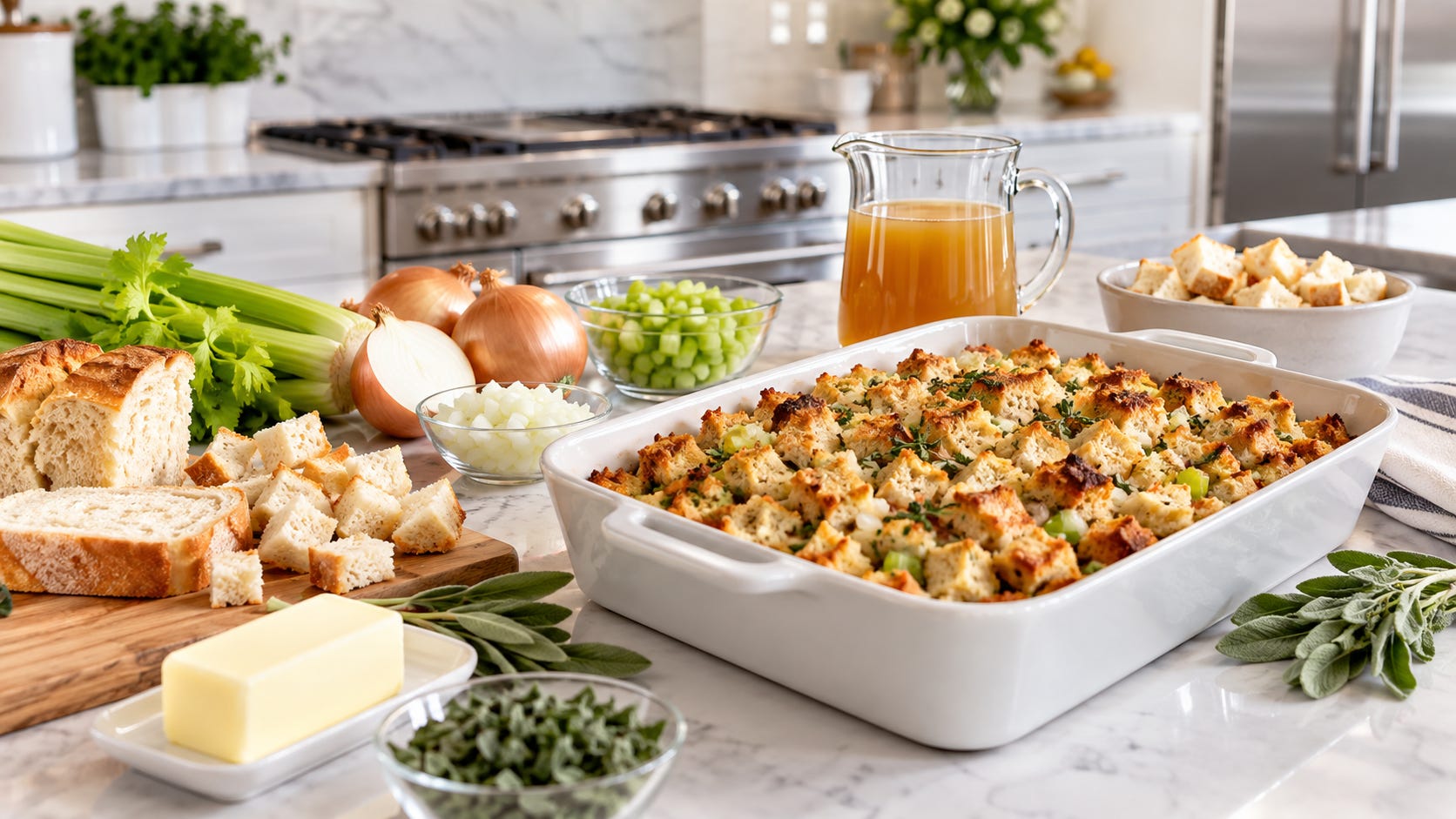
Once we accomplished this task, we decided to create a Cooking Therapy session titled “I’ve Got the Stuff Stuffing.”
I used it as a chance for Sophie to name positive attributes and create her own self-stuffing.
Ultimately we mined the metaphor for “stuff I’m made of” and “stuff I’d like to add over time.”
That distinction matters.
Because confidence isn’t always about adding something you don’t have.
Sometimes it begins with noticing what you already brought to the table.
Maybe you’re smart.
Maybe you’re creative.
Maybe you’re funny as hell.
Maybe you’re compassionate, dependable, curious, resilient, generous, or thoughtful.
And maybe there are qualities you’d like to develop, too.
Cooking Therapy gives us a tangible way to look at both.
That’s part of what makes the kitchen so interesting as a therapeutic space. We can actually see the process of taking what we already have, adding something new, allowing things to soften and come together, and creating something different from the individual ingredients.
The recipe becomes more than a recipe.
It becomes a way to explore ourselves.
And that’s exactly what we did with Sophie.
This is one of the ideas I explore in my book, Cooking As Therapy: How to Improve Mental Health Through Cooking. Cooking Therapy uses the ordinary processes of cooking - heating, chopping, layering, and more - as opportunities for self-reflection, insight, and change.
I’ve Got the Stuff Stuffing
The name may make you smile, but there is something very intentional behind it.
Stuffing is, after all, about what you put inside.
So as you make this recipe, the question isn’t simply What ingredients are going into the pan?
It’s:
What are you made of?
And perhaps just as importantly:
What would you like to add over time?
The recipe itself gives us plenty to work with.
The butter begins the process of infusing.
The celery and onion give us a chance to think about the individual ingredients that already make us who we are.
Sage becomes a reminder of wise choices.
The broth becomes a base that absorbs and infuses.
And the seasonings become the traits we already have - and the ones we may want to develop.
And sometimes we may over season or under season.
That’s okay, too.
If “over seasoning” happens in life, add a little something else like patience or explanation.
If it’s the opposite, “under season,” just add more, like embracing your personality and sharing it.
Want more Cooking Therapy like this?
The kitchen can give us more than dinner.
It can give us a place to slow down, notice our patterns, experiment with new ways of thinking, and sometimes see ourselves a little differently.
That’s what I explore here in Therapeutic Bites - using ordinary cooking moments to uncover insight, self-awareness, and those unexpected “I never thought of it that way before” moments.
Paid subscribers can continue below for the complete Cooking Therapy recipe and session instructions for I’ve Got the Stuff Stuffing.
It’s a simple recipe, but the process gives you a chance to think about the qualities you already have, the ones you’d like to develop, and what it means to recognize that you may already have more “stuff” than you realize.
