

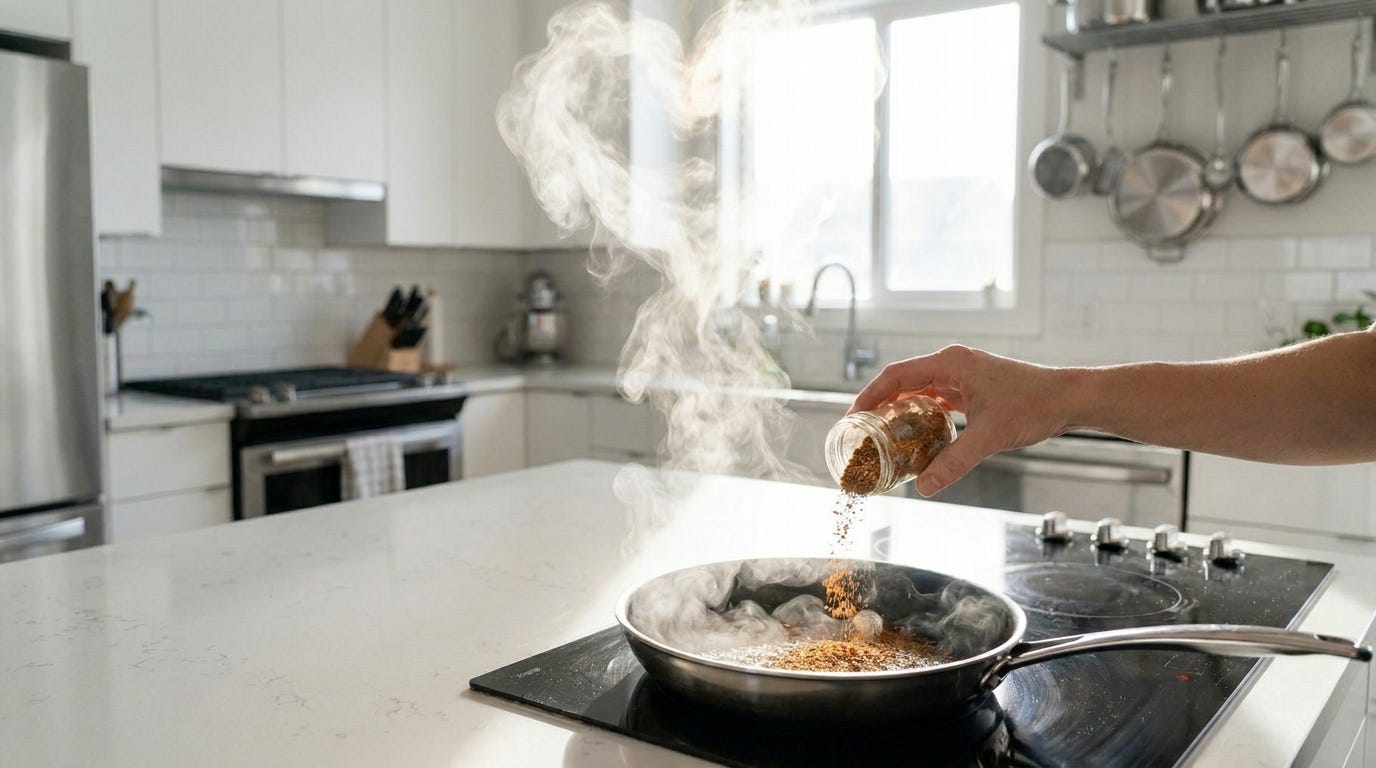
Ever watched a chef in action and felt like you were witnessing culinary wizardry?
The way they mix, blend, and transform ordinary ingredients into extraordinary dishes can feel like pure magic.
Making a great meal often resembles the work of a mad scientist - experimenting with flavors, adjusting the balance, and constantly tasting until everything is just right.
It’s about being fearless, creative, and having fun with the process.
Instead of cooking, think of it this way: you’re orchestrating a symphony of tastes, textures, and aromas.
You’re combining ingredients in new and unexpected ways, tweaking recipes, and adding your own personal touch.
That pinch of spice here, a dash of herbs there, or a surprising twist of lemon can elevate a dish from mundane to memorable.
It’s this adventurous spirit that makes cooking so exhilarating!
But there’s something else happening in that kitchen.
A good cook isn’t simply following instructions. They’re paying attention.
They taste.
They notice.
They adjust.
Maybe the sauce needs more salt. Maybe the soup is too thick. Maybe the recipe called for one thing, but what is actually happening in the pot tells you something different.
And that’s where cooking becomes particularly interesting through the lens of Cooking Therapy.
Because sometimes the most useful thing we can do isn’t follow the instructions perfectly. It’s notice what’s actually happening and decide what needs to change.
Now, let’s take this concept into the realm of relationships.
Just as in the kitchen, where a bit of creativity and experimentation can lead to amazing results, the same approach can work wonders in our personal connections.
Relationships, like great meals, thrive on a bit of spice and innovation.
It’s about surprising your partner with thoughtful gestures, adding new experiences, and keeping the spark alive through playful and imaginative moments.
Imagine bringing that same enthusiasm and curiosity to your relationships.
Maybe it’s trying a new activity together, planning a spontaneous date night, or simply infusing your daily interactions with a little more zest and creativity.
Just like cooking, relationships benefit from a willingness to experiment and grow, transforming the ordinary into something truly special.
And perhaps that’s the part of the metaphor worth holding onto.
Experimentation doesn’t mean throwing everything out and starting over.
A cook doesn’t taste a dish and say, Well, that’s it. This is a disaster.
They ask, What does this need?
A little more seasoning?
Less heat?
Something fresh?
More time?
Sometimes the answer is to add something. Sometimes it’s to take something away. And sometimes, after tasting and adjusting, you discover that what you thought needed fixing was actually just fine.
That’s a remarkably useful way to look at ourselves, too.
We can become so accustomed to thinking that something about our lives - or ourselves - needs to be fixed that we forget to simply taste what’s there.
Is this working for me?
Does this still feel right?
What has become too much?
What’s missing?
What might happen if I tried something different?
As a therapist, this is one of the things I love about Cooking Therapy.
The kitchen gives us a tangible, familiar way to explore questions that can otherwise feel much harder to put into words.
You don’t have to sit down and immediately figure yourself out.
Sometimes you can start with dinner.
Because experimentation also requires something we don’t always give ourselves enough of:
Permission.
Permission to try.
Permission to discover that something doesn’t work.
Permission to change the recipe.
Permission to surprise ourselves.
And maybe even permission to stop taking ourselves quite so seriously.
In the kitchen, nobody expects every experiment to become a five-star meal. Some are delicious. Some need another ingredient. Some become stories we tell later.
The same can be true of our lives.
Not every experiment has to succeed to teach us something.
Sometimes the discovery is simply realizing, That wasn’t for me.
Sometimes it’s, I like this more than I expected.
And every once in a while, we throw something unexpected into the mix and discover a combination we never would have thought to try.
That’s where the magic happens.
So, whether you’re in the kitchen or navigating the nuances of a relationship, embrace your inner mad scientist. Mix things up, take risks, and savor the delightful surprises that come from a bit of creativity and experimentation.
Maybe the goal isn’t to get the recipe for life exactly right.
Maybe it’s to become curious enough to keep tasting it.
If that thought resonates with you, I’m so happy you’ve found Therapeutic Bites.
Join me as we look at the everyday things we cook, chop, stir, taste, burn, salvage, share - and discover what they might be telling us about the way we live.
The kitchen has more to teach us than we sometimes realize.
And there’s always another recipe to explore.
P.S. What’s one area of your life where you could use a little more experimentation right now - your relationships, your routines, or simply the way you’re responding to stress? I’d love to hear what’s brewing and how I can help.
Debra Borden, LCSW, is a therapist and author of Cooking As Therapy. Known as “The Sous Therapist,” she helps readers turn everyday kitchen routines into actionable mental health tools.
This is such an engaging piece, Debra. Using the kitchen as a laboratory for self-reflection and relational growth is brilliant.
The blend of culinary creativity and therapeutic wisdom makes this publication, Therapeutic Bites, such a joy to read.